FREE Registration = Exclusive Member Prices — Join Now

My Cart
Mitsubishi Engine Oil Grades Explained: 0W-20 vs 5W-30 vs 5W-40
Mitsubishi Engine Oil Grades Explained: 0W-20 vs 5W-30 vs 5W-40
When people ask us which engine oil their Mitsubishi needs, the honest answer almost never starts with a brand. It starts with the grade. 0W-20, 5W-30, 5W-40, 10W-40: those numbers decide how the oil behaves on a cold morning and how it holds up once the engine is hot. Put the wrong one in and, at best, you waste a bit of fuel. At worst you leave the engine short of protection when it needs it most. Mitsubishi's genuine (DiaQueen) range runs to five grades, so here is what actually separates them.
The rule of thumb is simple: smaller numbers mean thinner oil. Thinner oil moves faster and saves a little fuel. Thicker oil keeps a stronger film in an older or harder-worked engine. Most modern Mitsubishi petrol engines want something thin. Older and high-mileage ones usually prefer something with more body.
What the two numbers actually mean
Every grade is written as a number, then W, then another number. Take 5W-30. The first number with the W (it stands for winter) tells you how easily the oil pumps when it is cold. Lower is thinner cold, so a 0W reaches the top of a cold engine quicker than a 5W or a 10W. The second number is how thick the oil still is once the engine is at full temperature. A 20 stays thinner than a 30, and a 40 is thicker again.
So a 0W-20 is thin cold and thin hot. It flows fast and barely drags on the engine, which is where the fuel saving comes from. A 10W-40 is the opposite end: thicker cold, thicker hot, with a heavier film. One is not better than the other. The right grade is whatever your engine was built around.

The five Mitsubishi genuine grades, side by side
| Grade | Base oil | Cold flow | Hot film | Best suited to |
|---|---|---|---|---|
| 0W-20 | Fully synthetic | Thinnest | Thin | Newest petrol engines; best fuel economy |
| 5W-30 | Semi synthetic | Thin | Medium | Most modern 2.0 to 2.4 petrol engines; safe all-rounder |
| 5W-40 | Fully synthetic | Thin | Thick | Harder-driven or higher-mileage petrol engines |
| 10W-40 | Semi synthetic | Medium | Thick | Older, higher-mileage engines that burn or rattle a little |
| 10W-30 | Mineral | Medium | Medium | Older, low-stress engines on short service intervals; budget |
Each grade above links to its own product page, or you can browse the complete genuine engine oil range on our store.
0W-20 vs 5W-30
This is the question we get most, because both are thin oils for modern engines and they sit right next to each other. 0W-20 is the thinner of the two. It is what the newest engines leave the factory with, and it gives you the quickest cold-start flow and the best economy. 5W-30 holds a slightly heavier film once hot, which makes it the safe pick for 2.0 to 2.4 engines and for cars that have a few years on them. If your manual says 0W-20, stick with 0W-20. If it lists 5W-30, or you simply want a touch more film on an older engine, go 5W-30. There is not much in it either way.
5W-40 vs 10W-40
Both keep a thick 40 film when hot, so both protect well under load and heat. What sets them apart is the cold flow and the base oil. 5W-40 is fully synthetic and flows thinner on a cold start, which keeps the engine cleaner and better looked after in stop-start traffic. 10W-40 is semi synthetic and a bit thicker when cold. That heavier base earns its keep on an older engine, where it helps control oil consumption and quietens things down. Pick 5W-40 for a modern engine you drive hard, and 10W-40 for an ageing one that has started to use a bit of oil.
Fully synthetic, semi synthetic or mineral
In the Mitsubishi range the grade and the base oil come as a pair, so it pays to know what the base type means. Fully synthetic (the 0W-20 and 5W-40) is the engineered stuff: most stable flow, longest protection, cleanest engine. Semi synthetic (the 5W-30 and 10W-40) mixes synthetic and mineral, which buys you most of that protection at a friendlier price. Mineral (the 10W-30) is plain conventional oil. It is the cheapest, and it does the job on an older, low-stress engine as long as you change it on time.
So which grade should you choose?
Start with the grade printed in your owner's manual or stamped on the oil cap. That is the one Mitsubishi designed the engine around, and nine times out of ten it is also the right answer. From there:
- Newest engines that ask for 0W-20: 0W-20 fully synthetic.
- Most modern 2.0 to 2.4 petrol engines: 5W-30 semi synthetic.
- Petrol engines you drive hard, or with high mileage: 5W-40 fully synthetic.
- Older engines that are getting noisy or using oil: 10W-40 semi synthetic.
- Older, low-stress engines on a budget: 10W-30 mineral.
One rule worth remembering: never go thinner than the grade your engine asks for, and only go thicker if you have a real reason, like age, oil use or engine noise. The one exception to all of this is the diesels. A Triton or Pajero diesel needs a diesel-rated low-SAPS oil (usually DL-1 spec), not any of the petrol grades above. If that is your vehicle, ask us and we will point you to the right one.
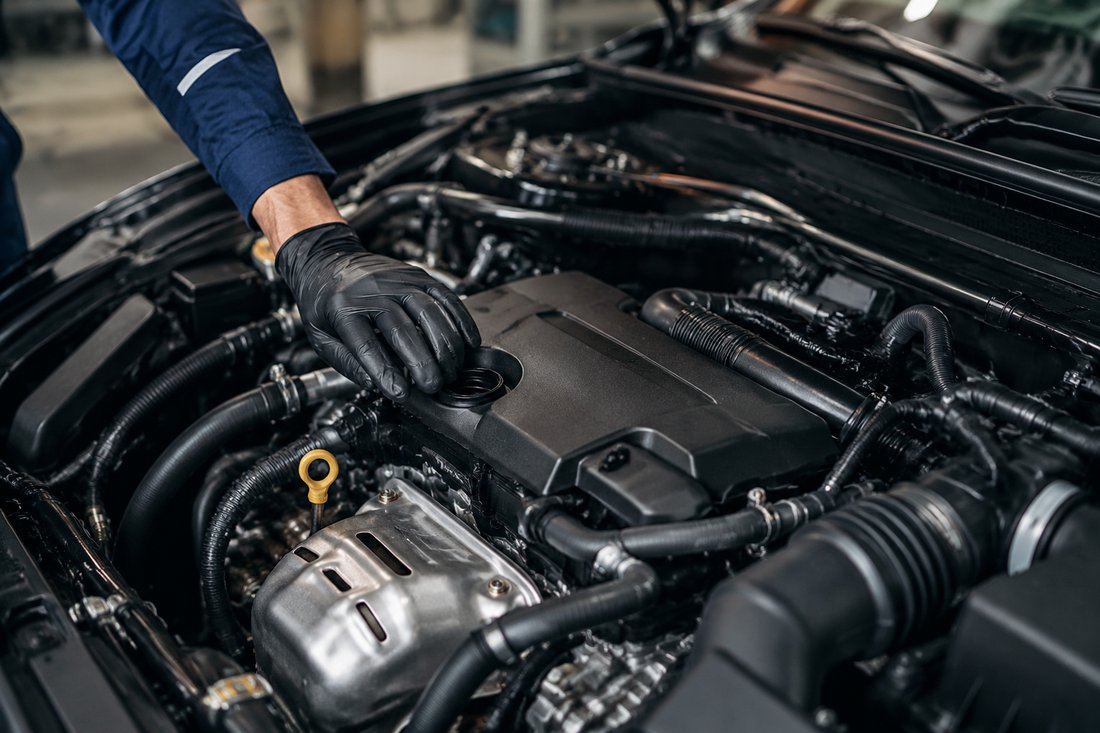
An oil change is also the time to fit a fresh genuine oil filter. An old filter quietly undoes the benefit of new oil.
Related reading: Engine oil API ratings (SN, SP, SQ) explained. The service rating is a separate thing from the viscosity grade, and it is worth knowing both before you buy.
Frequently asked questions
What does 5W-30 mean?
The 5W is how easily it flows cold (lower is thinner cold). The 30 is how thick it stays once hot. So 5W-30 starts up well on a cold morning and keeps a medium film at temperature, which is why it suits most modern petrol engines.
Can I use 5W-40 instead of 5W-30?
Usually yes. They flow the same when cold, and the 5W-40 just holds a thicker film hot, at the cost of a little economy. The swap you should avoid is going thinner than the engine specifies, for example dropping to 0W-20 where 5W-30 or 5W-40 is called for.
Is a thicker oil better for protection?
Not by itself. Run thicker than the engine was built for and you slow the cold-start flow and lose a bit of economy for no real gain. A thicker film only helps when the engine actually calls for it, which usually means an older or harder-worked unit.
What is the difference between semi and fully synthetic?
Fully synthetic is the engineered oil, with the most stable flow and the longest protection. Semi synthetic blends synthetic and mineral for most of that performance at a lower price. Both are good oils. Get the grade right first, then choose the base type.
Does Malaysia's hot weather mean I need a thicker oil?
No. The second number already covers protection at full operating temperature, and the W number is only about cold flow. Stick to the factory grade. A hotter climate is not a reason to jump up a grade.
Is there really a free gift with the oil?
Yes. Every genuine Mitsubishi engine oil comes with a free Mitsubishi T-shirt, any 4L bottle adds a free Fuso windscreen shampoo, and the 5W-30 4L and 10W-40 4L come with a matching free 1L bottle. It all applies at checkout while stocks last.
Free gifts with every genuine Mitsubishi oil
Every genuine Mitsubishi engine oil on our store ships with gifts that add themselves at checkout. No code, nothing to claim, just there while stocks last:
- Free Mitsubishi T-shirt with any genuine Mitsubishi engine oil.
- Free Fuso windscreen shampoo with any 4L bottle.
- Free matching 1L bottle with the 5W-30 4L and the 10W-40 4L, so five litres for the price of four.
Pick your grade from the table above, add it to the cart, and the gifts you qualify for appear at checkout.
Share
Related Products
-
 Mitsubishi Genuine Fully Synthetic Engine Oil 0W-20 4LNow Only MYR 168.99 Regular Price MYR 241.41
 -
 Mitsubishi Genuine Fully Synthetic Engine Oil 5W-40 4LNow Only MYR 139.99 Regular Price MYR 199.99
 -
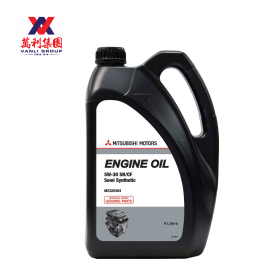 Mitsubishi Genuine Semi Synthetic Engine Oil 5W-30 4LNow Only MYR 124.99 Regular Price MYR 178.56
 -
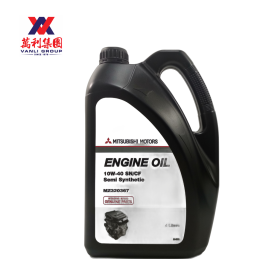 Mitsubishi Genuine Semi Synthetic Engine Oil 10W-40 4LNow Only MYR 124.99 Regular Price MYR 178.56
 -
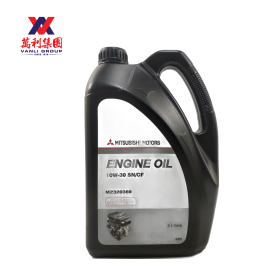 Mitsubishi Genuine Mineral Engine Oil 10W-30 4LNow Only MYR 89.99 Regular Price MYR 128.56

Validate your login