FREE Registration = Exclusive Member Prices — Join Now

My Cart
What Is Car Coolant, Anyway? Types, Colors, and When to Change It
What Is Car Coolant, Anyway? Types, Colors, and When to Change It
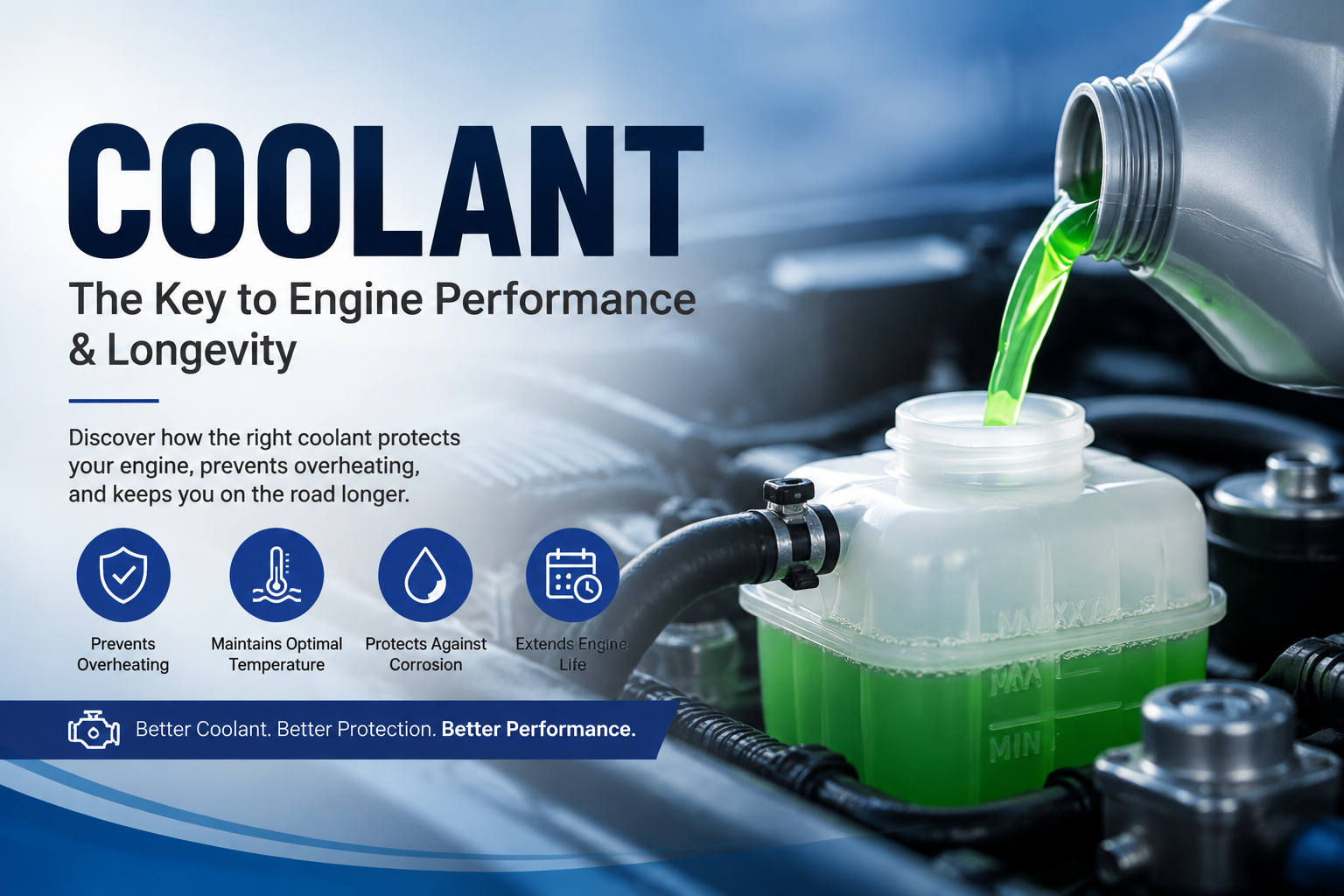
Ever popped the hood and spotted a tank filled with bright colored liquid, then wondered, "What is that, and do I actually need to worry about it?" That's coolant (also called antifreeze), and today we're breaking it down in the simplest way possible.
Quick answer: Coolant is the liquid that keeps your engine from overheating in summer and freezing in winter. Most cars need it checked or changed every few years, and different colored coolants generally shouldn't be mixed together.
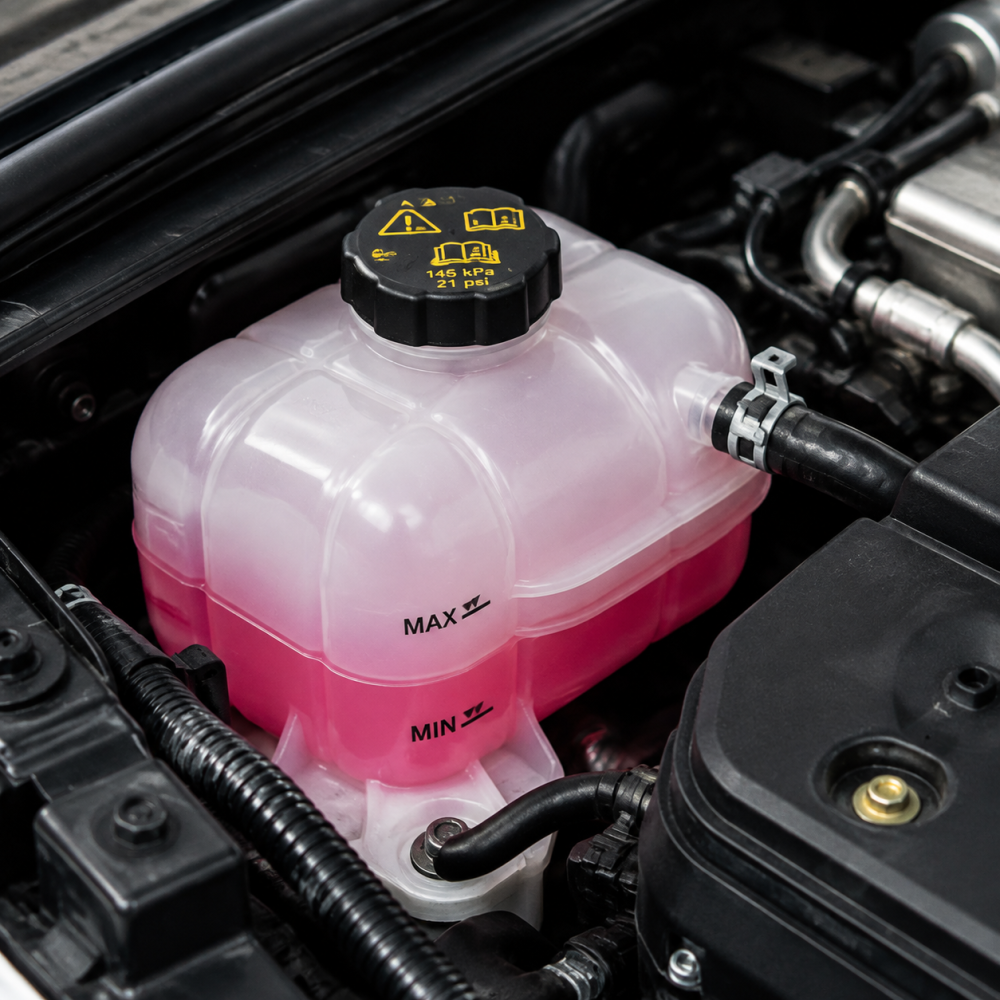
1. What does coolant actually do?
- Your engine generates a huge amount of heat while it runs, and without something to cool it down, it could overheat within minutes.
- Coolant, a liquid that circulates between the engine and the radiator works a lot like blood in your body: it absorbs the heat the engine produces and carries it to the radiator, where it cools off before flowing back to the engine to soak up more heat.
- In winter, coolant has another job: keeping the water inside your engine from freezing. Plain water expands when it freezes, and that expansion can crack engine parts from the inside. That's why coolant contains ethylene glycol or propylene glycol, A chemicals that act as "antifreeze" and keep the liquid from freezing even in cold temperatures. That's also where the name "antifreeze" comes from.
2. What types of coolant are there?
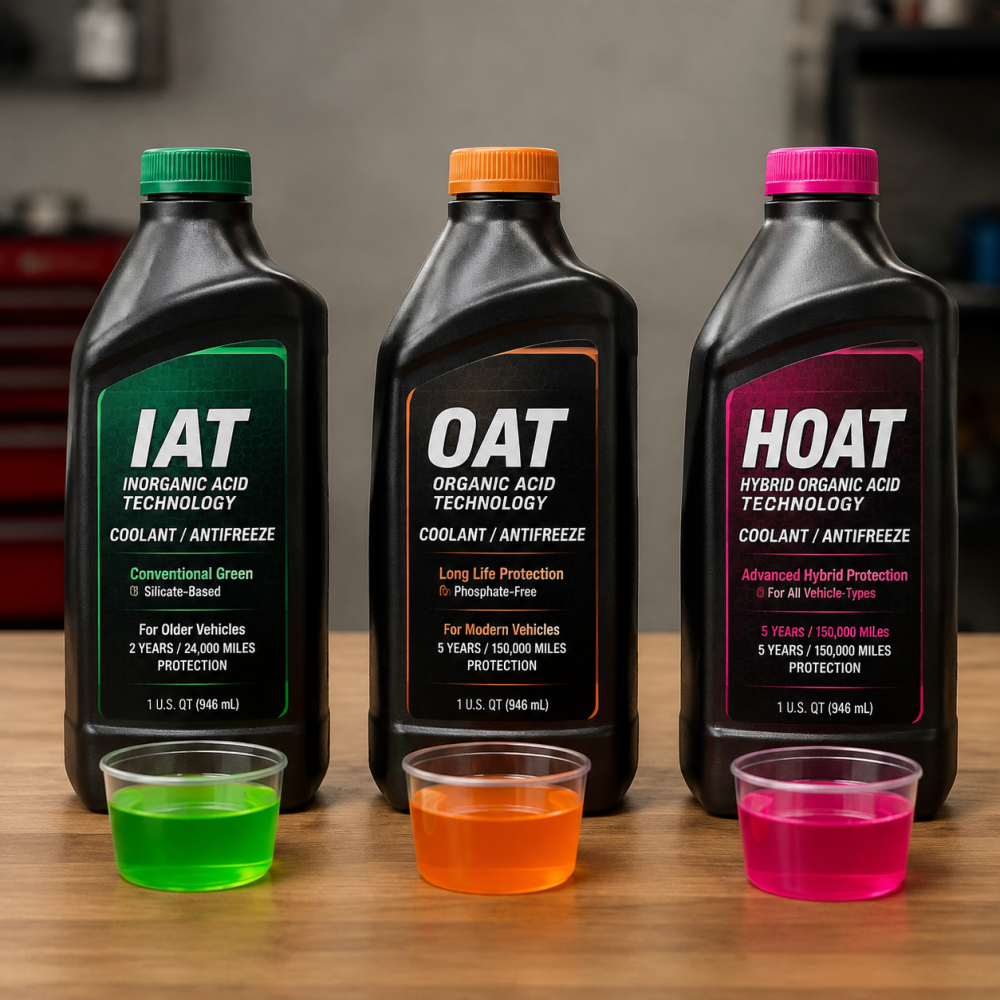
Walk into any auto parts store and you'll see several kinds of coolant on the shelf. They generally fall into three main categories:
- IAT (Inorganic Additive Technology): The traditional type, usually green, with corrosion protection that typically lasts around 2 years before it needs replacing. Common in older vehicles.
- OAT (Organic Acid Technology): A more modern formula, usually orange or red, with longer-lasting corrosion protection, often around 5 years. Widely used in many American and some Japanese vehicles.
- HOAT (Hybrid Organic Acid Technology): A blend of the two technologies above, available in various colors (yellow, pink, blue). Common in European vehicles and some newer Japanese models.
Why does the type matter so much? Because the corrosion-protection additives in each formula are chemically different, and mixing them can cause the additives to cancel each other out or even clump together and clog the cooling system. The safest approach: check your owner's manual before adding coolant, and see exactly what type the manufacturer recommends.
3. What do the different coolant colors mean?
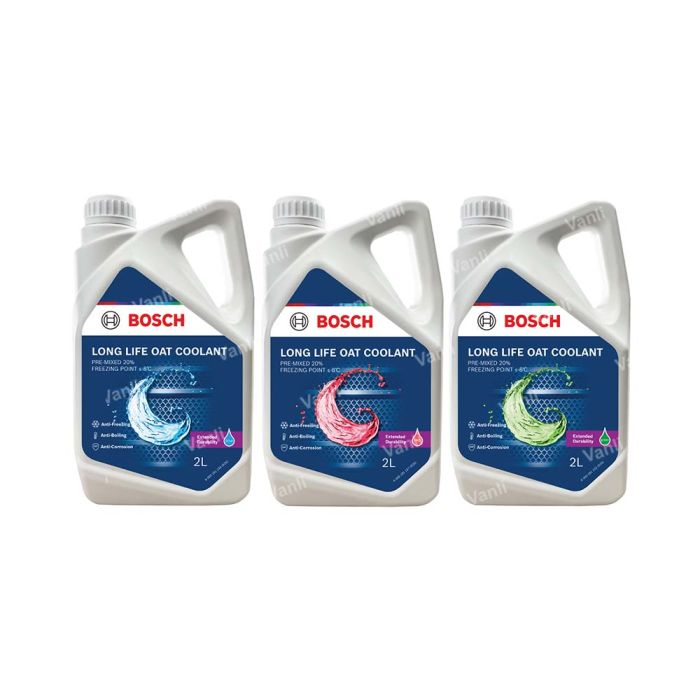
Many people assume color tells you what the coolant is "for," but color is really just a way manufacturers distinguish between formulas. There's no single global color standard, so different brands can use the same color for different formulas. Common colors include:
- Green: typically traditional IAT
- Orange, red: typically OAT
- Yellow, pink, blue, purple: typically various HOAT blends
Remember this rule of thumb: color is only a rough guide, not an absolute standard. What actually matters is the formula type printed on the bottle (IAT/OAT/HOAT) and what your owner's manual calls for, not just picking a color that "looks right." If you're ever unsure, ask a mechanic or stick with the exact type your manufacturer specifies. It'll save you a headache later.
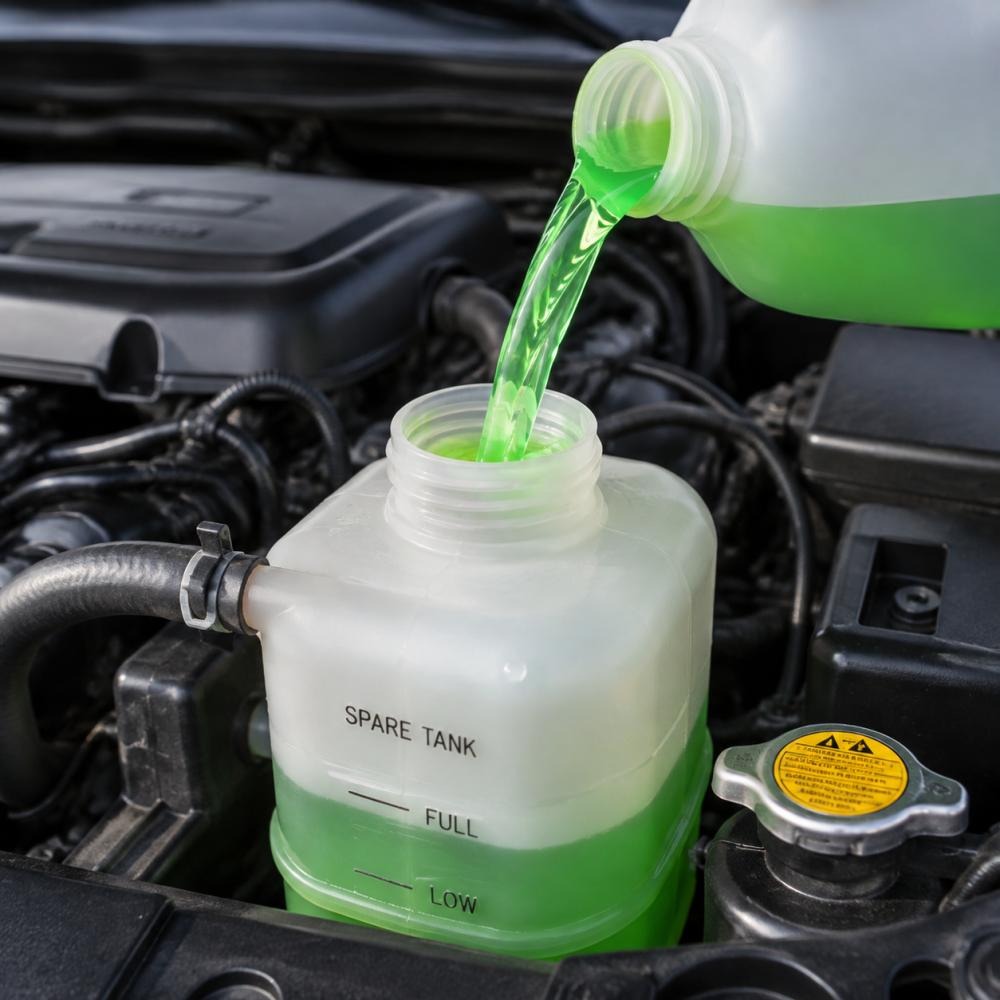
4.When should you change or "flush" your coolant?
This is the part everyone actually wants to know. A flush means draining out the old coolant along with any buildup or debris in the cooling system, then refilling it with fresh coolant, not just topping off the level with more liquid.
General signs it's time:
- Check the time or mileage: Recommended change intervals vary quite a bit by formula type, roughly anywhere from 2 to 5 years, always defer to your owner's manual for the exact number.
- Check the color and clarity: Healthy coolant should look clear and brightly colored. If it looks cloudy, brownish, rusty, or has particles or an oily film floating in it, it's time for a change.
- Watch the dashboard: If your temperature gauge is running hotter than normal, or an "engine overheating" warning light comes on, it could be related to low or degraded coolant, and it's worth getting checked soon.
- Watch for leaks: If you keep spotting colorful puddles under your car, or you find yourself topping off coolant often, there's likely a leak somewhere in the system. That's not a simple top-off fix. It needs a mechanic to find and repair the leak.
A safety note: Engine overheating is a serious issue, and ignoring it for too long can cause real (and expensive) engine damage. If your dashboard warning light comes on, it's best to pull over somewhere safe and let the engine cool down before checking anything, or call a mechanic. Don't keep driving on an overheating engine!!
The bottom line
Coolant may not be glamorous, but it's quietly protecting your engine from overheating and freezing every single day. Three things are worth remembering: check your manual before adding coolant so you use the right type, never mix different coolant types together, and keep an eye on its color and your temperature gauge so you don't miss it when it's time for a change. Do that, and your engine will keep running smoothly for years to come.
-----------------------------------------------------------------------------------------------------------------------------
FAQ:
Q: Can I change my own coolant at home? Technically yes, but the cooling system involves pressure and high heat, so it's easy to get burned or damage a part if you're not careful. Used coolant also needs to be disposed of properly since it's not something you can just pour down the drain. For beginners, having a shop handle it is usually the safer, easier route.
Q: Is coolant the same as windshield washer fluid? No. Washer fluid is only for cleaning your windshield. Putting it in the wrong reservoir won't just be useless, it can actually damage the cooling system. Never mix the two up.
Q: Can I just top off coolant with plain water if I run low? In an emergency, adding a small amount of plain water to get you somewhere is okay. But it dilutes the antifreeze and anti-corrosion properties, so you should replace it with the proper coolant mixture as soon as possible rather than relying on water long-term
Share

Validate your login